Welcome to the Pier House!
If you travel to Scotland, like I do from the west of the country, then the easiest route to take is the M6 motorway, which ends just south of the border near Carlisle. Next time you pass Carlisle, or if you stop at the last services on the M6, at Southwaite, think of this, Carlisle is almost exactly half way between Land’s End and John O’Groats. A few miles further north near to the town of Gretna Green you pass over into Scotland. No border controls here, just a large sign at the side of the road proclaiming: “Ceud mìle fàilte“, which is Gaelic for, “a hundred thousand welcomes”. This sums up Scottish hospitality and the warm generous nature of the Scottish people.
So what about Scotland the country? Scotland can be roughly divided into four areas, the Southern Uplands which lie to the north of the border with England, the Northern Uplands, the northern part of which is the Highlands, a broad lowland valley in between them, often called the Midland Valley and the Islands.
The Southern Uplands
A hilly area ideal for walking. The hills are reasonably high, nothing over 3000 feet, but tend to have a gently rolling aspect. If you really want to get to grips with the area and you like a challenge try walking the Southern Upland Way, 212 miles from Portpatrick in the west to Cockburnspath in the east. The average time for the walk is somewhere around two weeks. Visit Southern Upland Way guide for more detailed information.
Midland Valley
To the north of the Southern Uplands is the Midland Valley. This area is dominated by two cities and two rivers. Edinburgh and the Forth in the east and Glasgow and the Clyde in the west.
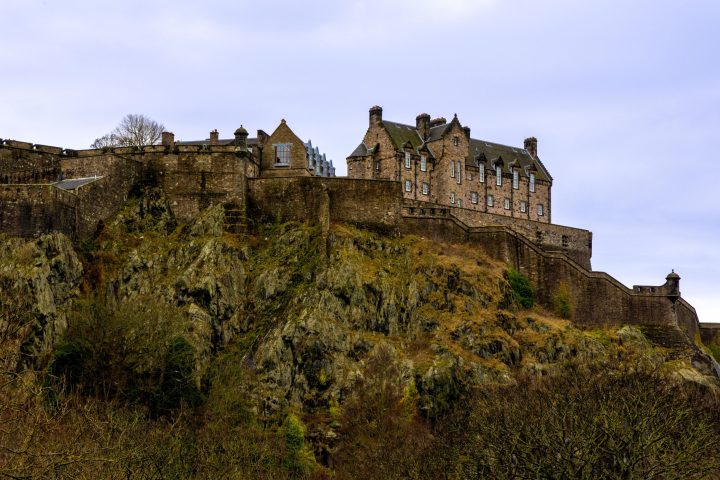
Edinburgh, the smaller of the two cities, is the capital of Scotland, houses the Scottish Parliament and is most famous for Edinburgh Castle, Edinburgh Castle which dominates the city. Nearby is Leith, Edinburgh’s port where the Royal Yacht Britannia can be seen.
Glasgow is the biggest city in Scotland and one of the liveliest and most vibrant cities in Europe. A former European City of Culture (1990), it boasts the St Mungo Museum of Religious Life and Art, two of the best football clubs in Scotland, Glasgow Rangers and Glasgow Celtic and it hosted the 2014 Commonwealth Games
The Northern Uplands
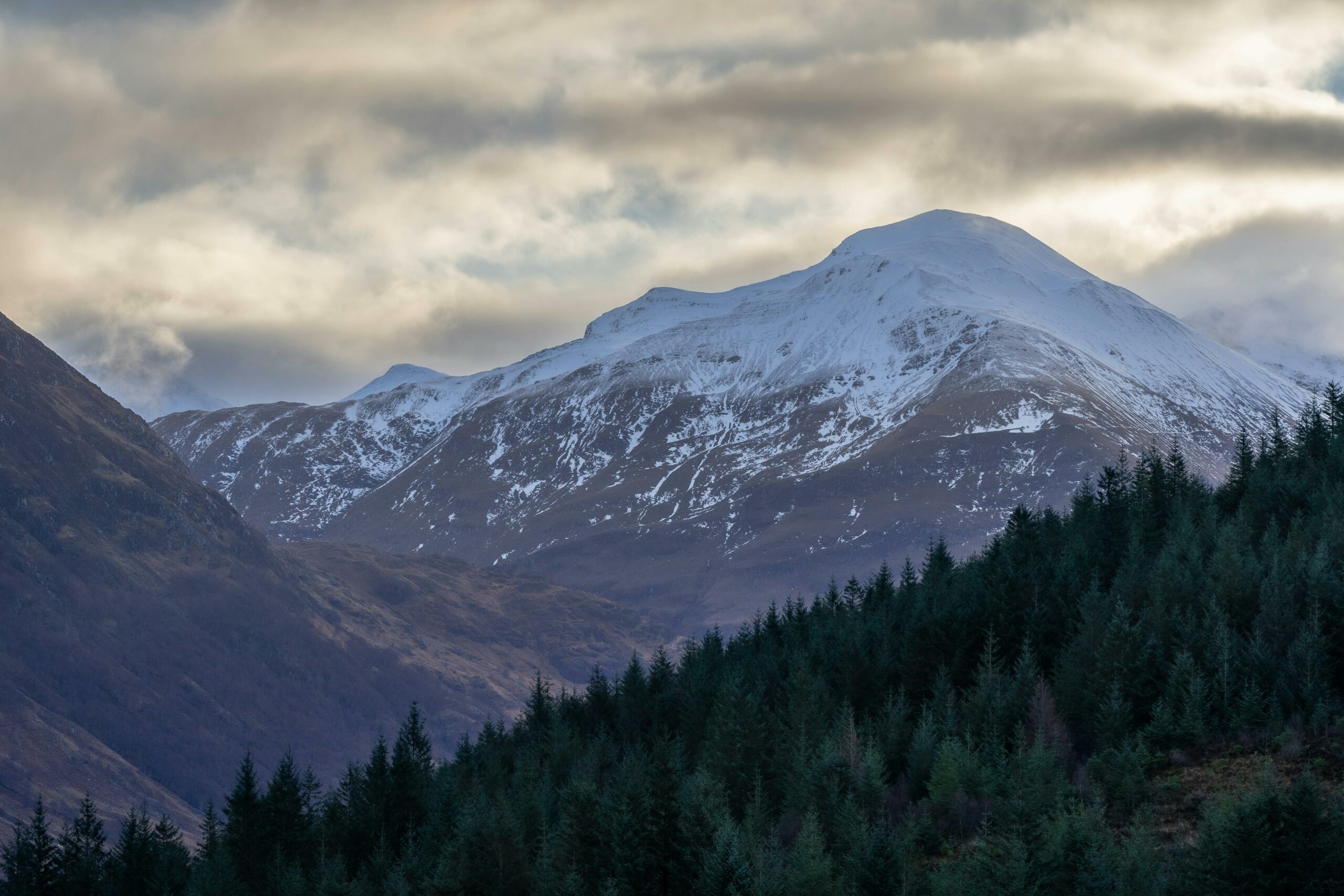
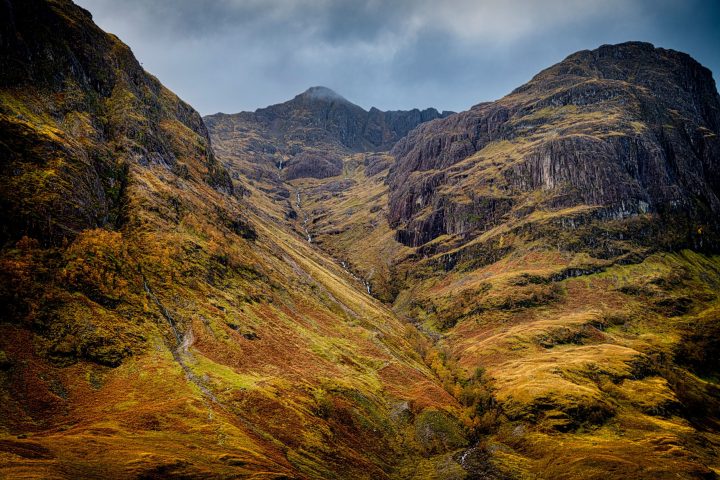
The Northern Uplands contain the only mountains in the British Isles over 4000 feet. The highest of these, at just over 4400 feet, is Ben Nevis ( Ben Nevis webcam) which is near Fort William. It also contains the two largest lakes in the British Isles: Loch Lomond at 24 miles long by 5 miles wide and 600 feet deep at its deepest point, and dark, mysterious Loch Ness 23 miles long and over 750 feet deep, home to the Loch Ness Monster, or is it? Loch Ness Guide
The Islands
Scotland boasts almost 800 islands, most of them small. Only about 60 are larger than 3 square miles. A large proportion of the islands are contained in four groups, the Inner and Outer Hebrides off the west coast of Scotland, and the Orkneys and Shetlands of the north coast.
The Outer Hebrides
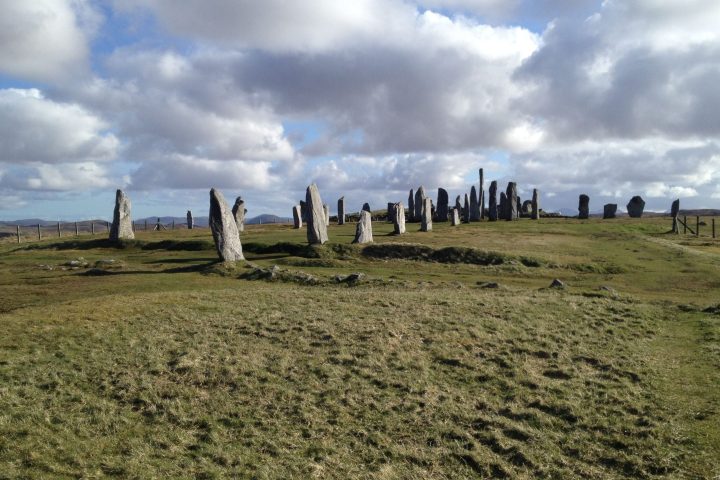
The Outer Hebrides, now called, at least by the local council, the Western Isles is home to one of Scotland’s greatest ancient treasures, the standing stones at Callanish. An aerial view shows a cross or cruciform shape, which pre-dates Christianity by nearly 3,000 years.
The Shetland Islands
The Shetland Islands are so far north that it is almost quicker to travel to the Norwegian coast than it is to travel to the Scottish mainland. The Shetlands are an excellent place to see the Aurora Borealis, or Northern Lights, a great and free atmospheric display.
The Orkney Islands
The Orkney Islands also have many pre-historic sites. Probably the best are Skara Brae, described by some archaeologists as the best preserved pre-historic village in Europe, and the Ring of Brodgar, a Neolithic stone circle over 300 feet in diameter with about half of the original 60, seven feet high stones, still standing.
The Inner Hebrides
The Inner Hebrides contain many of the better known islands such as Islay, Jura, Skye and Mull. A trip to Tobermory, the capital of Mull, is a must for young children as it is the home of Balamory. VisitScotland’s Balamory page
So go and visit Scotland and I wish you, “Turas math leibh”, have a good journey